
Between a flood and a pyjama party: an interview with Egor Koshelev
January 26, 2024
Egor Koshelev is an artist with a brilliant knowledge of art history (he received his PhD in art history in 2006). He has an academic education and partly an academic career — he continues to teach at the Stroganov Russian State University of Art and Industry, from which he graduated. However, the realistic school of Soviet painting became only a base for him, into which a variety of styles are cut in and transformed it.
There were no solo exhibitions of the artist for 6 years. And now he has spoken to the audience with the exhibition "Gryphonage", held in VLADEY Space. It became the prologue for the solo exhibition "The Artist's Gestalt or Sudden Retrospective", which opened at MMOMA.
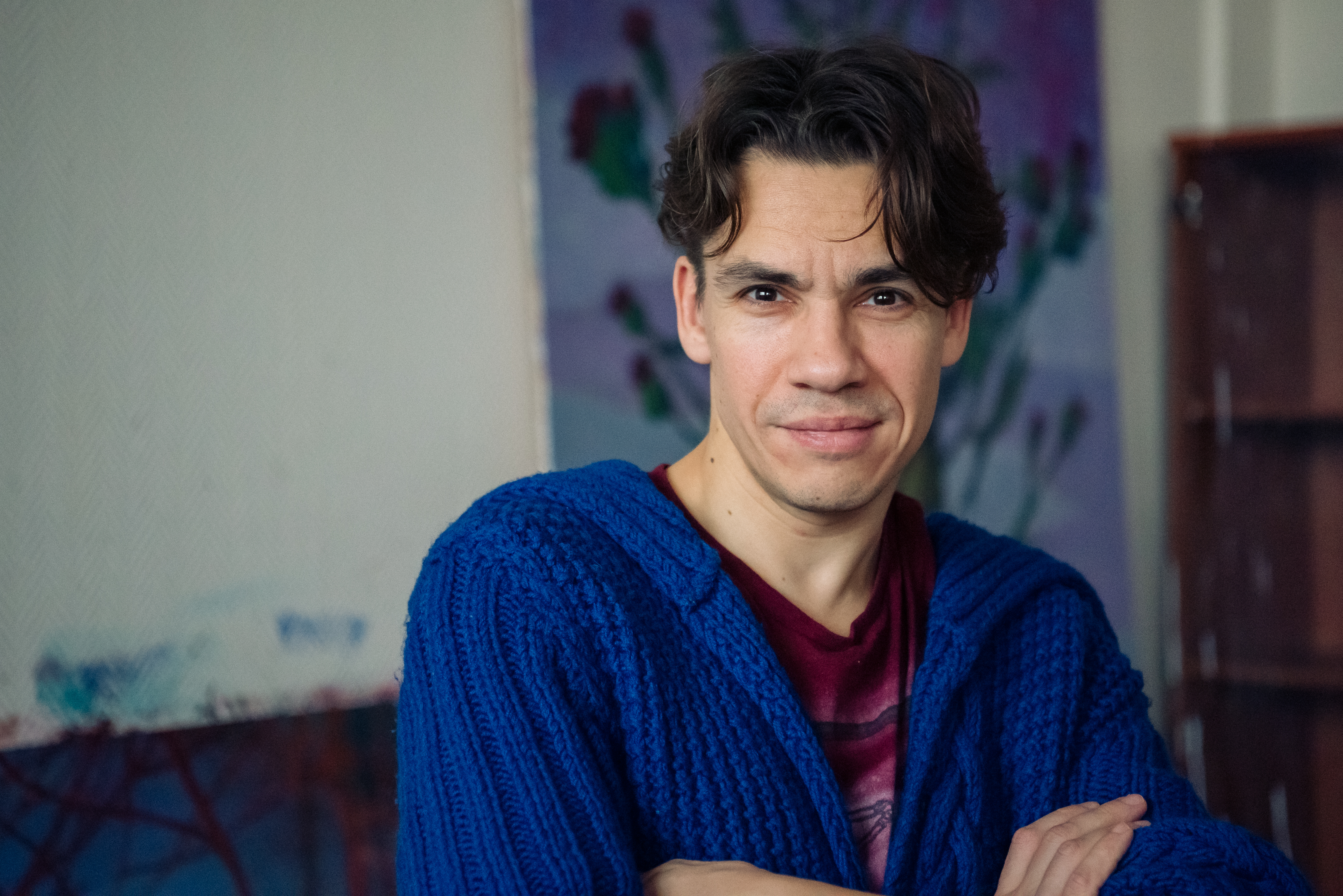 Egor Koshelev in his studio. Photo: VLADEY
VLADEY: Why are you paying such close attention to graphics right now?
Egor Koshelev: It is more precise to say "drawing", because for me it is drawings after all. Not just graphics, but drawings - they are very different practices. There is a European tradition of understanding drawing as a key basic artistic practice.
Vasari* once called drawing "the mother of all arts". The classical European attitude to drawing, which has lasted for several centuries, interpreted it as a basic artistic practice, a practice that gives realisation of artistic thinking. Zuccari owns the amazing words, "Drawing is the idea of God in us." When I read this phrase in one of the artistic treatises, I almost felt a lightning strike — my hair stands up on my head, it's such an accurate definition of what drawing is, if you understand it deeply and seriously.
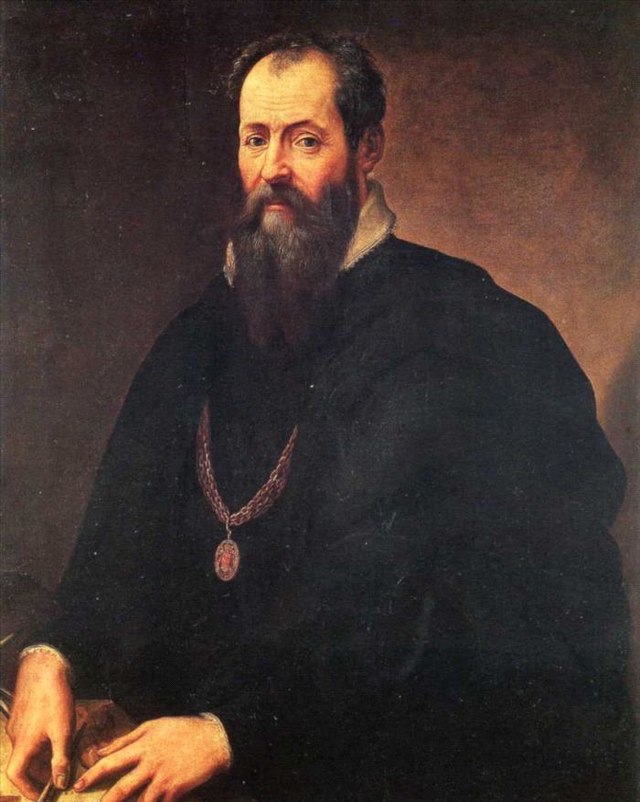
A drawing is not some handwriting, not a quick random fixation of a thought on a piece of paper. Drawing is first of all the experience of formulating an idea, which, precisely due to the specifics of the medium, finds its reality. When the pin, the nib of the pen, the pencil lead works, we can see how its trace lays down on the paper, we can observe the very process of forming space, the sequence of movements, each of which remains.In this way, drawing, strangely enough, acquires a unique unity in the development of spatial and temporal dimensions, unlike a pictorial work, which we perceive in their entirety. No one realises how much time was spent on making the artwork. It could be 100 hours, or 20 hours, or an hour, or a few years. In a Rembrandt drawing or, say, a Picasso drawing, we see the whole sequence of touches that both shape space and fix time. It is such space —time as a continuum formed on the surface of a sheet of paper, in which you can feel yourself not only a spectator, but a full participant in the process that unfolds in front of you.
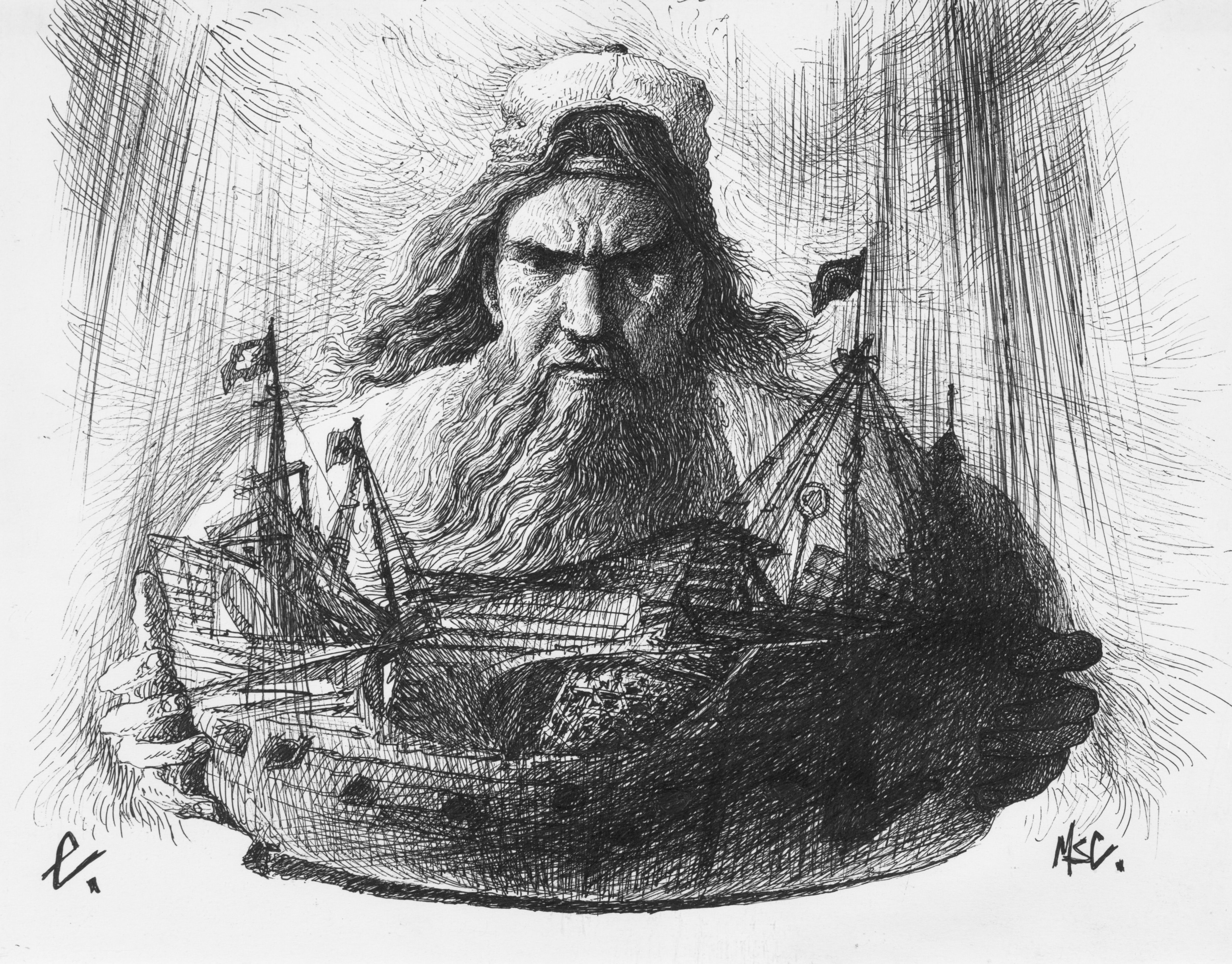 Egor Koshelev. The Story of Noah (1/7 sheets), 2021. Photo: VLADEY
Painting, by virtue of the medium itself, may be more spectacular and evocative, but it does not involve such an explicit exposure of the creative process itself, which is revealed in the sequence of touches of pen, pencil, felt-tip pen, charcoal. The picture is in this sense less indicative.Of course, there are different paintings - you can even imitate a drawing in a painting. But still the painting works in a different register, acting as if at once, covering you first of all with its colouristic effect. Space in a painting functions differently, according to a different logic, and the very nature of the formation of pictorial reality depends largely on the specificity of the pictorial touch. You apply paint by spreading the brush over the surface. Whereas in the process of drawing, you form space along a completely different trajectory, invading inside, literally crashing into the thickness of still inanimate white, shaping and comprehending it as a fundamentally different reality.
In this sense, of course, drawing is very important for someone who wants to understand what visual art is, what artistic thinking is, what volume and space are. It can be more indicative than a painting or a mural. Like, for example, Rembrandt's drawings, or Michelangelo's drawings, or Leonardo's drawings: they more clearly represent the way these artists thought, the very type of their artistic thinking, than some finished pictorial things.
V: There is one work in the exhibition called "The Collector". I would like to discuss with you who the contemporary collector is in principle. How do you see him and how does this correlate with the drawing?
Е.К.: I would say that today's society has paradoxically become a society of collectors. The other thing is that not everyone realises this, not everyone is aware that they are building their very life as a collection. It was finally formed in the information era, when the connection between man and the surrounding world was completely rearranged, and in fact the main territory of habitation and the main building material for man became the external visual reality, which everyone with the help of tricky technical gadgets rebuilds or recomposes, reorganises and designs to his own liking. Surely, depending on everyone's level of culture, needs and tastes, this reality looks a little different. Basically, when we make our own playlist, it's a modern day collecting experience that is realised as an effective way of communicating with the world. So, yes, a collector is almost every one of us. The other thing is that everyone's collections are different and everyone's ambitions as a collector are different too. In this sense, collecting is a habitual and natural practice for modern people.
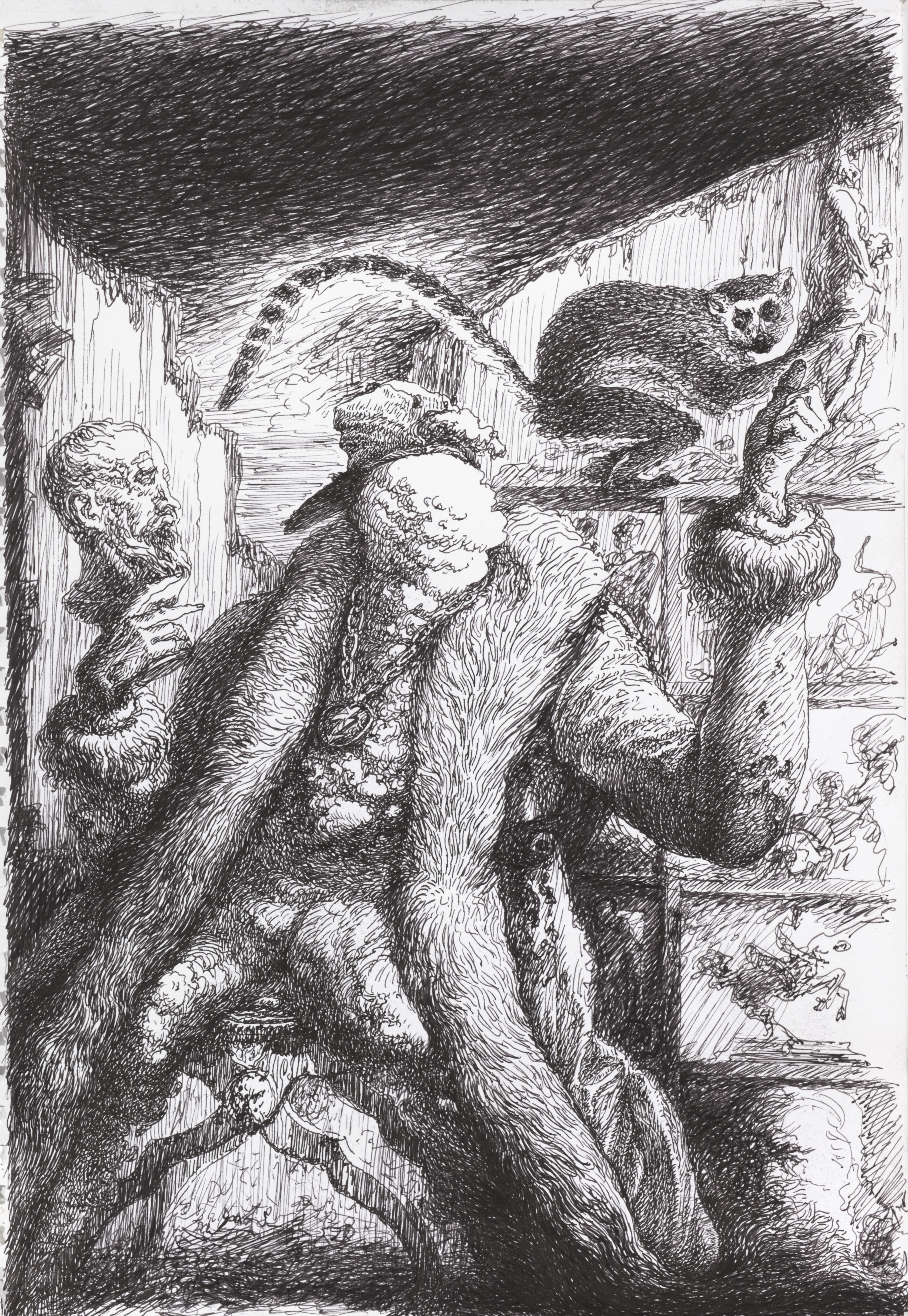 Egor Koshelev. Collector, 2023. Photo: VLADEY
V: And those people who buy the works?
Е.К.: I would say that someone who we can fully call a collector is the kind of conscious collector who conceptualises his collection as something self-valuable. As a kind of separate structure that he has been building up over a long period of time. That's the main thing. Obviously, for me contemporary collecting is also such an autoreflexive practice. The collector carries out a huge cultural work and is embedded in a situation where the same kind of work was carried out by many of his predecessors. That is, entering the territory of art collecting, a person - perhaps without realizing it at first - finds himself in the circle of those connoisseurs who contributed to the development of art, set, determined the nature of its development for many centuries. In the same way, a painter willy-nilly finds himself an interlocutor of artists of the past. It is not by chance that you and I had a conversation about collecting drawings as an ancient tradition.
V: Can you tell me more about the story?
Е.К.: One must realise that the first collections of drawings were the domain of private art workshops. Moreover, it was something like such a testament or scripture of each bottega. Без корпуса рисунков мастерская просто не могла существовать. Who was the first picture book collector to go beyond narrow professional interests? Giorgio Vasari, the man we also know as the father of art history. His famous book of drawings was not just a collection, but a great historical compendium, which reveals more than just Vasari's tastes and his economic fortunes. It showed us living art history itself in the process of development. And Vasari himself, like the authors of later collections, was well aware of the role of such collections. In this sense, of course, it is difficult to overestimate them.
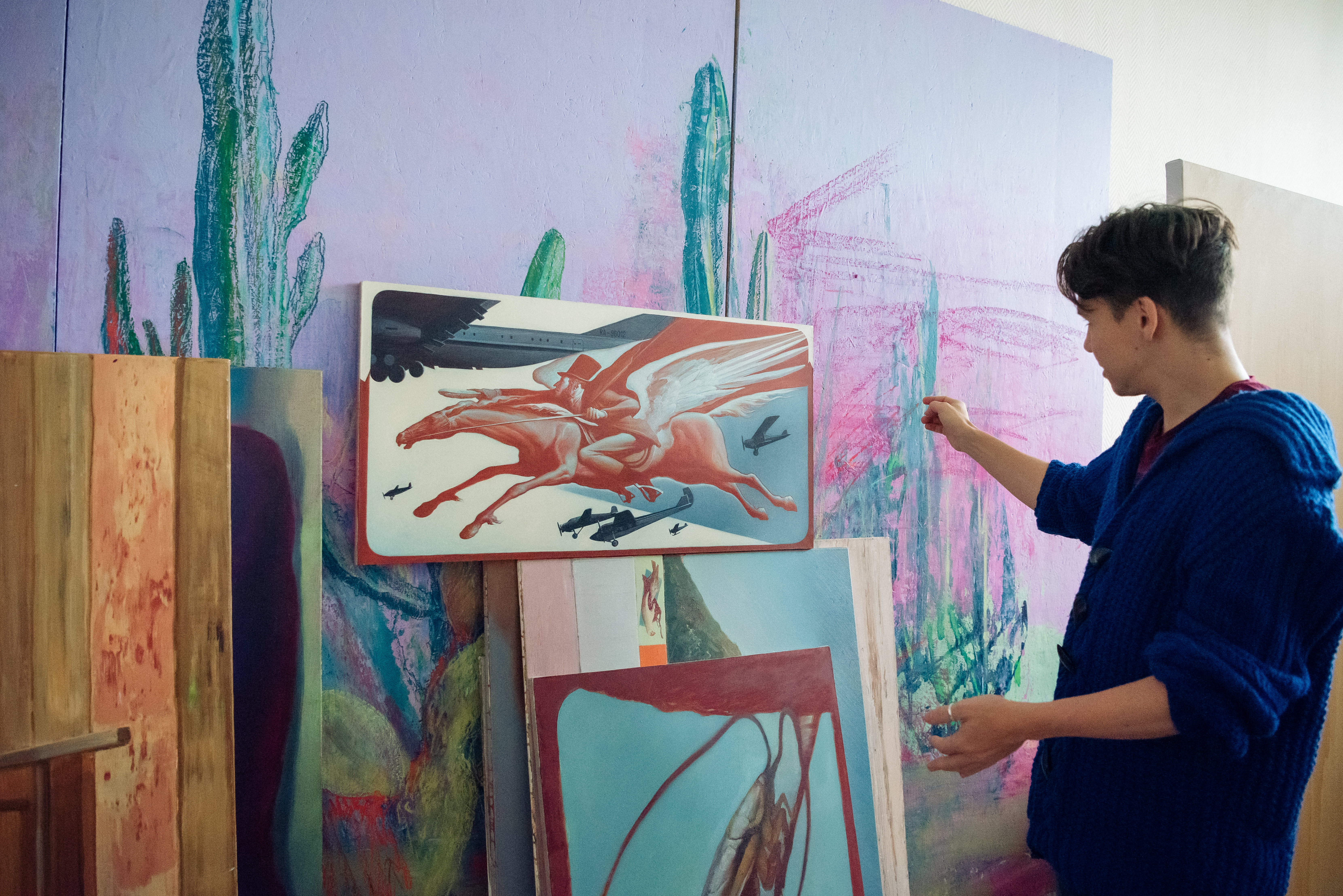 Egor Koshelev in his studio. Photo: VLADEY
So a person entering the territory of collecting simultaneously continues to compete in ambition with collectors of the past and enters into a long tradition of creating, rethinking, and re-defining cultural values, of constructing a great art history - among other things, we judge it precisely through collections. This can be seen most clearly in the oldest family collections in the historic palaces of the past. The Doria-Pamphili in Rome is not just a family collection, but the art history of Europe filtered through the tastes of generations of the Doria-Pamphili family, which is therefore accessible within the walls of a private mansion. And this is the kind of practice, the kind of cultural work that no one but collectors can do. If the artist builds his personal links with the world, trying to open his viewers' eyes to the surrounding reality, the collector opens his eyes to contemporary art, trying to show his final addressee, the viewer of the collection, what contemporary art is, based on his personal dialogue with the artists who work nearby him.
V: You said that everyone is a collector these days. What do you collect?
Е.К.: I create works. It can be said that this is an open art collection: through my hands it comes to the disposal of this world.
V: I'd like to talk about your regular co-author, curator Sergei Khachaturov.
Е.К.: I have known Sergei for quite a long time, probably fifteen years, if not more. As often happens in the artistic community, we ran into each other at a friendly bohemian meeting. It was immediately obvious that we had a lot to talk about, as our artistic tastes were somewhat similar. We became friends quite quickly. Sergei's curatorial ambitions gradually took shape and he began to invite me to participate in his projects: sometimes with small works, but we also had large-scale conceptual projects where I acted as an exhibition artist and exposer. It was always easy for us to work. Sergei is such an eccentric, a person with the broadest artistic tastes and interests, open to discussion when it comes to some controversial points.In addition, his artistic vision itself is panoramic, allowing for integration into projects of various, sometimes polar in their artistic forms, works that turned out to be quite close to me. He was never afraid to take risks, and neither was I. That is why our collaborative exhibitions over the past few years have included things extremely diverse both in terms of forms and subjects. There have probably been more than ten exhibitions in which we have co-operated.
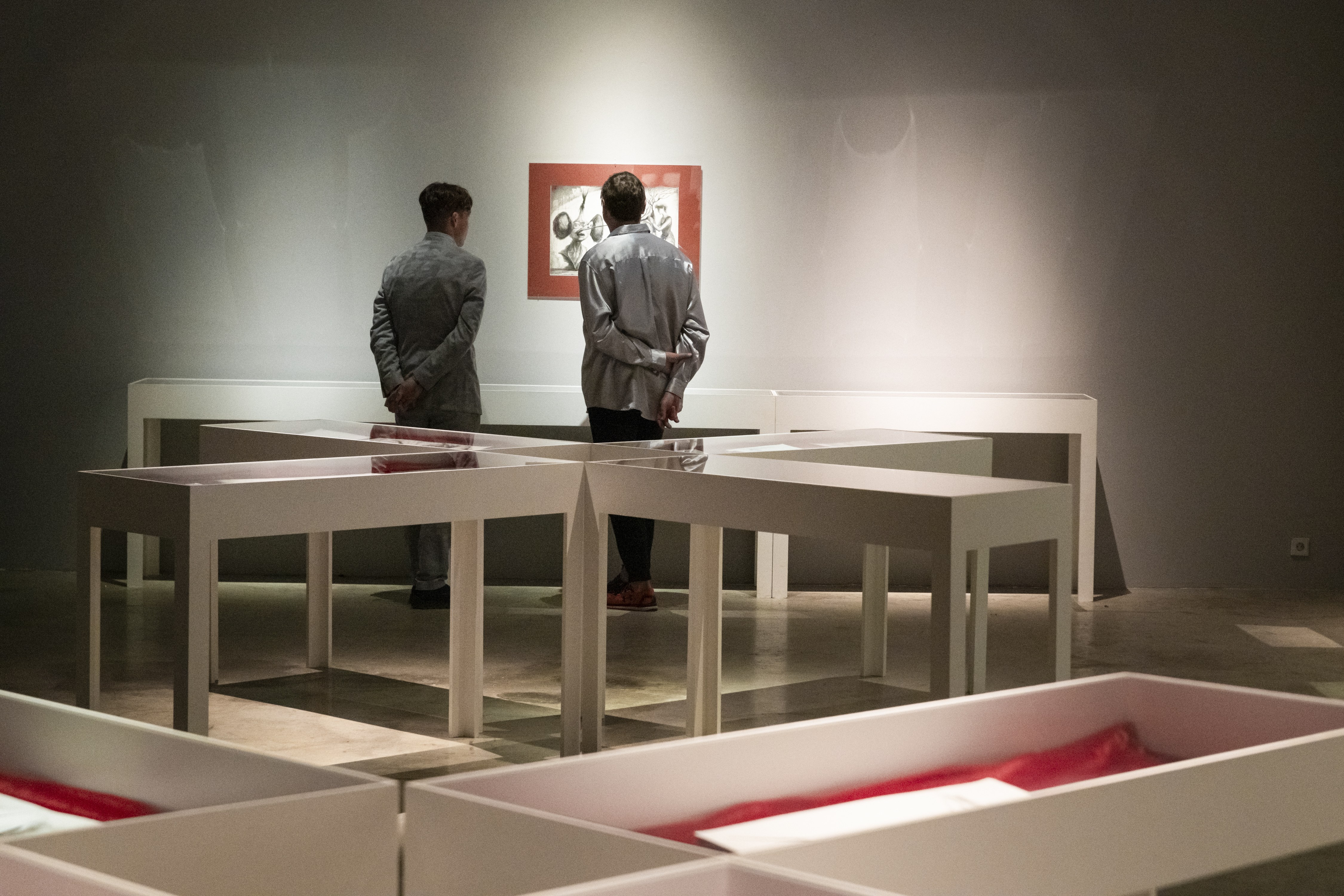 Egor Koshelev (left) and Sergei Khachaturov (right) before the opening of the exhibition "Gryphonage" in VLADEY Space. Photo: VLADEY
The story of the exhibition "Gryphonage" at VLADEY Space is as follows. For some time I had a desk where I sat and thought about future works, sketching something out. I pasted some representative, the most successful, promising for development ideas on the wall. When a sufficient number had formed, I took a photograph and liked the way they looked together. I posted them in a story for my close friends. Sergei saw this photo and jokingly wrote to me: "We should make an exhibition". I replied: "Well, I'm all for it". He calls me: "No, I'm serious, we should make an exhibition". I told him, "I'm not against it, but we should probably save up some more material." He says: "Let's do the exhibition, let's do it, let's do it, I'll arrange everything". And somehow I support this joke. Eventually he exclaims: "Well, I'll find a space!". I remark that we have a very good gallery that would probably be happy to host such an exhibition. Sergei says: "All right, then I'll contact Varvara (director of OVCHARENKO gallery)». About five minutes later, he phoned Varvara and then me - they had agreed on an exhibition. Of course, I didn't expect this, as we don't often exhibit drawings in the gallery. So, among other things, this is such an educational kind of project, adjusting the optics of perception of drawings in contemporary art.
After the agreement was reached, I naturally began to think about what to exhibit and how I would form an exhibition - not just from sketches. I started to revisit my albums and those graphic things that had been made in the past. And a couple of dozen new things were born, which I had time to finish by the opening. It seems to me that these are quite successful works for me, in a sense even stage-by-stage, programmatic, since a number of sheets represent both me today as an artist and my vision of the surrounding social and political reality. Well, and the medium itself is more severe, more rigid, collected, focused, which corresponds to our current reality in the best possible way.
V: Are you linking it to an actual agenda?
Е.К.: Yes, of course. As in the past, it does not seem to me very correct today to paint only bright coloured big pictures. We must still look for some other forms of communication that are appropriate to what is happening around us. It seems to me that drawing today, in a certain sense, seems to be a more honest form.
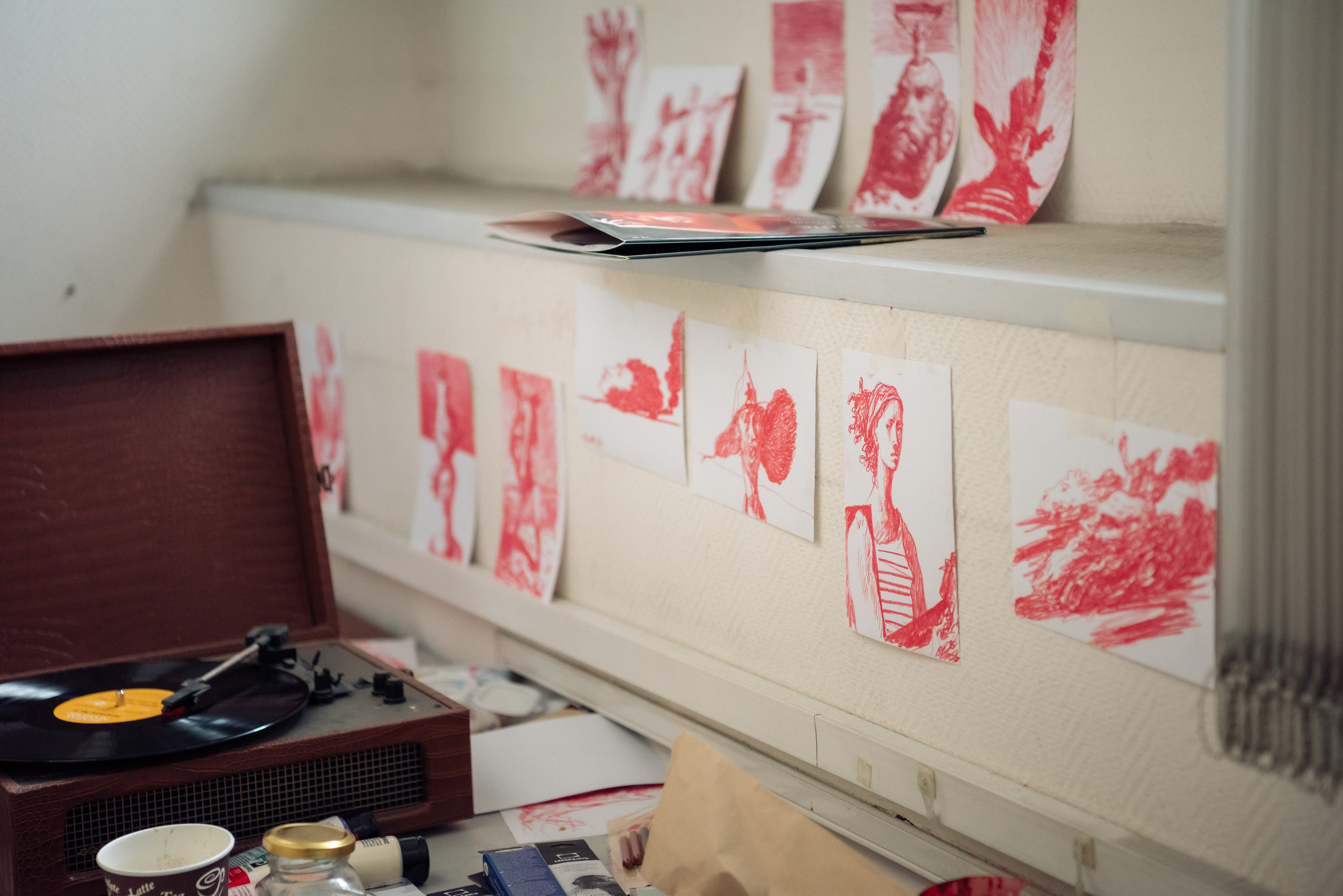 Egor Koshelev's studio. Photo: VLADEY
V: It's very interesting that first there was an exhibition in the workshop, which you presented through the gadget. And then you had an exhibition in a gallery.
Е.К.: Absolutely right. Over the past year I have had two workshops: one at Belorusskaya and one here. The relationship with them was structured in such a way that I spent my intellectual activity mainly there. I went there, sat there, drew something in my notebooks, thought up some plots, in general, worked out the ideological basis for the paintings that I would later paint here. This workshop served as a kind of production shop. Actually, it is still like that, there was never anything here but paintings. There wasn't even a chair. I sat on a bucket. But it was quite productive because I wasn't distracted by anything. I came just to write, and I couldn't relax or switch off in any way. But now, as you can see, the furniture from my last workshop has moved in here. I've made a little bit of a living, as much as possible for an artist. The emotional attachment is to that very small, very cramped room, but it was very well furnished and served as a reclusive artist's cell for a long time.
V: Have you met and discussed what the exhibition will look like?
Е.К.: Of course. First of all, we envisaged such a dialogical model for the construction of the exhibition, and William Hogarth was chosen as the second participant in the dialogue - a great English painter of strong satirical talent and an artist, I would say, criminally underestimated in our tradition. It was interesting to build a dialogue in this context, and it was also a challenge for me as an artist, because I was afraid of the neighbourhood until the last moment. Being in the same space as a great artist can be such a self-disclosing gesture, completely destroying your own art.
It was certainly a risk, however, a conscious one. Hogarth's art also suggested certain issues for "joint discussion". In me, this provoked artistic solutions, which I began to propose when designing the exhibition. In the end, because my creative imagination works in such a way that it automatically begins to produce answers to questions, it turned out that the final exhibition version, which was created on site, introduced into the exhibition space the motif of two crosses or two letters X - Hogarth and Khachaturov, in fact, my two interlocutors in the artistic project.
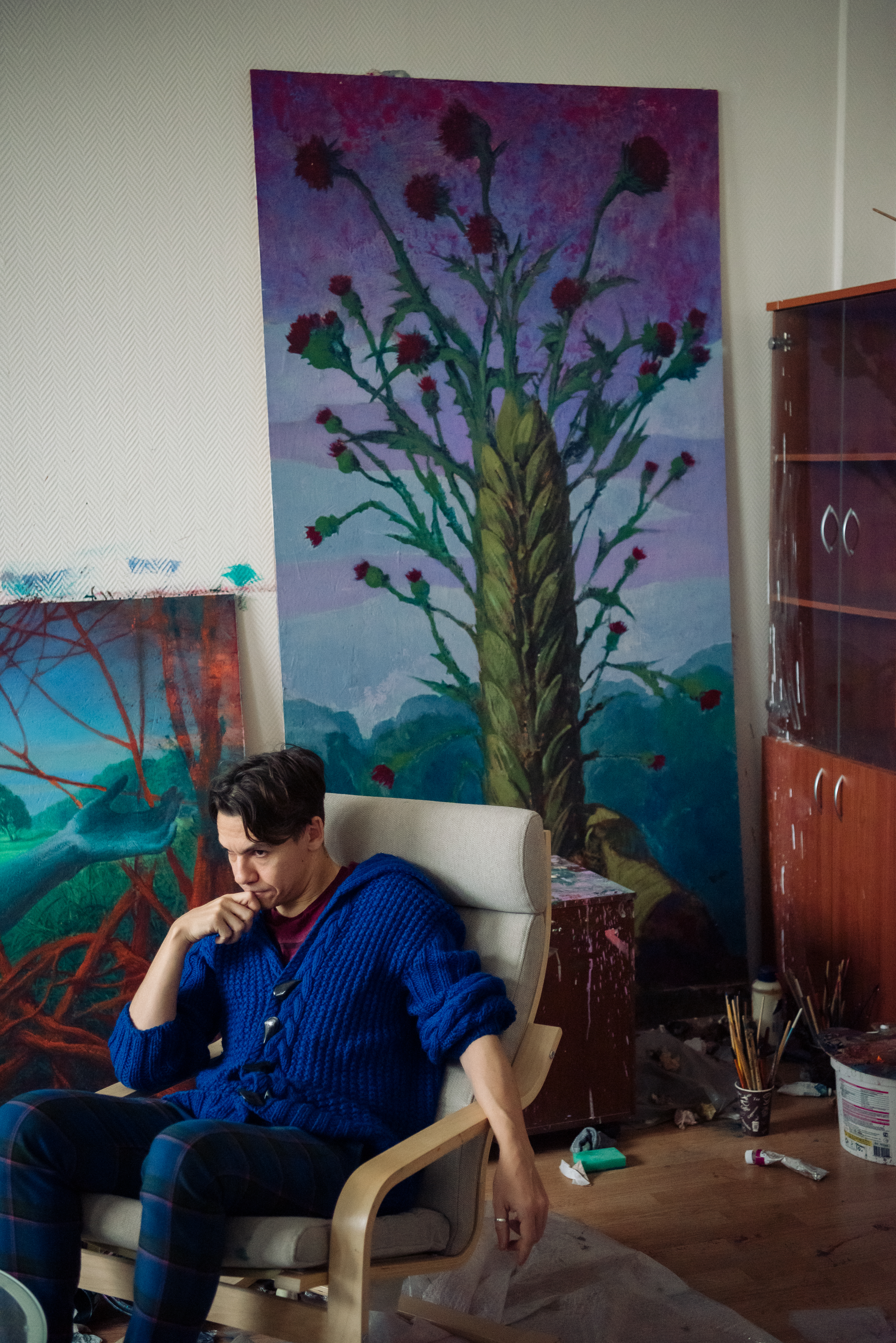 Егор Кошелев в мастерской. Фото: VLADEY
V: Can it be said to be a continuity and development of Hogarth's ideas?
Е.К.: I would say it's more of a dialogue. We have common features of artistic vision, such pronounced sarcasm, which is manifested in individual works. But, with this proximity, anyone who comes to the exhibition understands that we are talking about different artists who still need to somehow come to an agreement with each other. For example, I began to build this communication through some externally similar visual motifs - the comically exaggerated curls of Hogarth's wig and the motif of swirling clouds for me. I have been thinking for a long time how we can visually connect with each other so that at first glance it looks like a kind of visual structure, but so that everyone in this structure has their own place, separate, respectfully observed by the participants of the dialogue.
V: You haven't had any solo exhibitions for a long time, a kind of period of silence, and now one after another. Tell us about the forthcoming exhibition at MMOMA?
Е.К.: I can't agree that I was silent as an artist. Because every year I made a certain amount of work and did not stop exhibiting. Another thing is that recent socio-political events put an ethical burden on the artist and require me to formulate for myself what I am ready to say now, what makes sense. I believe that a solo exhibition is not some ordinary episode in an artist's life. Obviously, there are a number of tasks that cannot be solved by any other way than a solo exhibition. I want both to highlight important creative periods of the past and to show recent painting cycles as widely as possible.
We use cookies to analyze how visitors interact with the site and make it better
Read our cookie usage policy.